
À propos
Who are you?
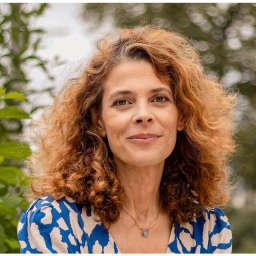
A product enthusiast for 28 years, I've designed and developed dozens of tech products, and supported just as many product and tech teams. Trained by the pioneers of lean in the West (including Michael Ballé) over the last 15 years,
I've been learning, practising and now teaching lean product design in a variety of contexts, particularly for start-ups and scaleups.
I'm co-author of the Shingo Prize-winning lean book "The Lean Sensei", and the main author of the forthcoming book "Build To Sell, the lean secret to building irresistible products and scalable businesses".
A former member of Agile France, I am now an active member of the Institut Lean France and have been teaching lean (TPS) and lean engineering at Centrale Marseille for 10 years.
What do you do for a living?
I work a lot with company founders who are starting up or looking to scale up, to find together the 'sweet spot' of customers and growth opportunities. I apply the same approach to larger companies looking for innovative but proven methods.
I also run Build To Sell bootcamps and workshops for people who first want to learn about lean methods in product design and development: CPOs, founders, PMs, POs, tech leads, developers and so on.
What are you going to talk about at FlowCon?
I'm going to talk about lean engineering.
Everyone is beginning to know about lean in one form or another: lean kanban, lean startup, lean UX, and so on. Although they incorporate a few principles taken from the lean approach, none of these methods is lean in the broadest sense of the term: an approach to designing and delivering products that rock by involving the whole organisation in the continuous improvement of value through the development of people.
With lean engineering, we get down to the nitty-gritty: what does 'value' really mean, and where and how do we get it? Product design is not a continuous feature spewing machine, but a space for testing various technical hypotheses without degrading value for customers (also known as resolving trade-offs).
In this workshop, we will be practising a key lean engineering concept: the product architecture diagram. This practice provides a link between the world of customers and the world of the product.
I suggest that you build your product architecture diagram together, in groups, to visualise and test your hypotheses.
What are you the proudest of?
My team at Taktique, and the products we design together. It's always a real thrill to spend time together thinking about what we're doing, the impact we're having and learning together.
I'm also very proud of the book we'll be releasing very soon, "Build To Sell, the lean secret to building irresistible products and scalable businesses".
What speaker and/or topic would you like to see at FlowCon?
What does it take to make a killer tech product these days?
If you were an art piece, which one would it be?
An acrylic painting with an interesting play of light. I paint myself and it's the light that inspires me :-).
What's your favorite band, artist or song?
I love opera: I'm a lyric singer in my spare time. I really like Offenbach because it's fun to sing.
Sum up your session or workshop in only 1 sentence
Free yourself from the features machine and join us in practising a key lean engineering concept.
What are the 3 top takeaways from your session or workshop?
- Lean product design is based on continuous reflection and experimentation around value creation with the tech teams.
- The architecture diagram bridges the gap between the world of customers and the world of tech
- Lean product improvement means resolving a set of technical trade-offs to fully satisfy stable customer preferences.
A product enthusiast for 28 years, I've designed and developed dozens of tech products, and supported just as many product and tech teams. Trained by the pioneers of lean in the West (including Michael Ballé) over the last 15 years,
I've been learning, practising and now teaching lean product design in a variety of contexts, particularly for start-ups and scaleups.
I'm co-author of the Shingo Prize-winning lean book "The Lean Sensei", and the main author of the forthcoming book "Build To Sell, the lean secret to building irresistible products and scalable businesses".
A former member of Agile France, I am now an active member of the Institut Lean France and have been teaching lean (TPS) and lean engineering at Centrale Marseille for 10 years.
What do you do for a living?
I work a lot with company founders who are starting up or looking to scale up, to find together the 'sweet spot' of customers and growth opportunities. I apply the same approach to larger companies looking for innovative but proven methods.
I also run Build To Sell bootcamps and workshops for people who first want to learn about lean methods in product design and development: CPOs, founders, PMs, POs, tech leads, developers and so on.
What are you going to talk about at FlowCon?
I'm going to talk about lean engineering.
Everyone is beginning to know about lean in one form or another: lean kanban, lean startup, lean UX, and so on. Although they incorporate a few principles taken from the lean approach, none of these methods is lean in the broadest sense of the term: an approach to designing and delivering products that rock by involving the whole organisation in the continuous improvement of value through the development of people.
With lean engineering, we get down to the nitty-gritty: what does 'value' really mean, and where and how do we get it? Product design is not a continuous feature spewing machine, but a space for testing various technical hypotheses without degrading value for customers (also known as resolving trade-offs).
In this workshop, we will be practising a key lean engineering concept: the product architecture diagram. This practice provides a link between the world of customers and the world of the product.
I suggest that you build your product architecture diagram together, in groups, to visualise and test your hypotheses.
What are you the proudest of?
My team at Taktique, and the products we design together. It's always a real thrill to spend time together thinking about what we're doing, the impact we're having and learning together.
I'm also very proud of the book we'll be releasing very soon, "Build To Sell, the lean secret to building irresistible products and scalable businesses".
What speaker and/or topic would you like to see at FlowCon?
What does it take to make a killer tech product these days?
If you were an art piece, which one would it be?
An acrylic painting with an interesting play of light. I paint myself and it's the light that inspires me :-).
What's your favorite band, artist or song?
I love opera: I'm a lyric singer in my spare time. I really like Offenbach because it's fun to sing.
Sum up your session or workshop in only 1 sentence
Free yourself from the features machine and join us in practising a key lean engineering concept.
What are the 3 top takeaways from your session or workshop?
- Lean product design is based on continuous reflection and experimentation around value creation with the tech teams.
- The architecture diagram bridges the gap between the world of customers and the world of tech
- Lean product improvement means resolving a set of technical trade-offs to fully satisfy stable customer preferences.
Les conférences seront bientôt disponibles.